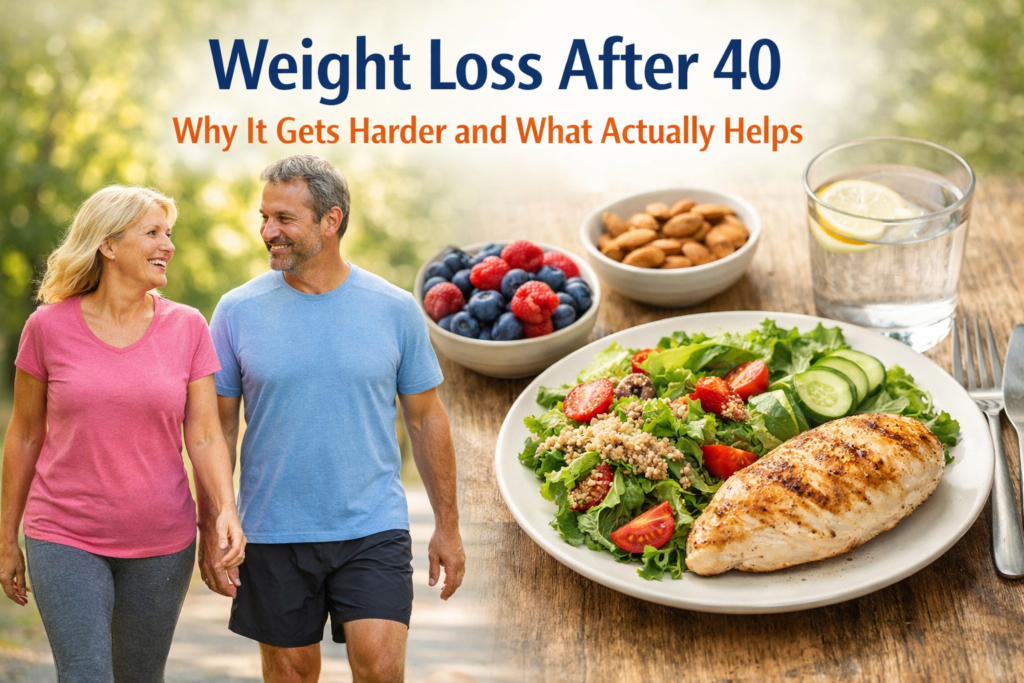
Many adults notice a frustrating pattern after turning 40. Weight seems to increase more easily, and losing it takes much more effort than it used to. Diets that worked in the past no longer give the same results. Even small changes in eating habits can show up on the scale.
This experience is common. It does not mean you are doing something wrong. In most cases, it reflects natural changes inside the body combined with lifestyle shifts that happen over time.
Understanding what is happening can help you make better choices and avoid advice that no longer works at this stage of life.
What Changes in the Body After 40
Weight loss after 40 is influenced by several biological changes. These changes are gradual, but their effects add up over the years.
Metabolism slows slightly
As we age, the body burns fewer calories at rest. This means you may need fewer calories than before, even if your activity level feels the same.
Muscle mass decreases
Muscle tissue naturally declines with age if it is not actively maintained. Since muscle burns more calories than fat, this can lower daily energy use.
Hormonal shifts occur
Hormones that affect appetite, fat storage, and blood sugar regulation can change over time. These shifts may lead to increased fat storage, especially around the midsection.
Recovery takes longer
The body may not recover from stress, poor sleep, or intense dieting as easily as it did in earlier years.
These changes are normal, but they require a different approach to weight management.
Why Common Weight Loss Advice Often Fails After 40
Many popular weight loss tips are designed with younger bodies in mind. After 40, these approaches may be less effective or even counterproductive.
Extreme calorie restriction
Eating too little can slow metabolism further and increase fatigue. It may also lead to muscle loss instead of fat loss.
Over-reliance on cardio
While movement is important, long hours of cardio without strength support may not produce the desired results anymore.
Ignoring sleep and stress
Weight loss advice often focuses only on food and exercise. Sleep quality and stress levels play a much bigger role after 40.
Quick-fix thinking
Short-term plans may lead to temporary changes, but they rarely support long-term health or consistency.
This is why many people feel stuck even when they are “doing everything right.”
Practical Tips That Support Weight Loss After 40
Weight loss after 40 is still possible, but it works best with realistic, supportive habits rather than aggressive plans.
Focus on strength and movement
You do not need intense workouts. Gentle strength exercises, resistance bands, or body-weight movements can help support muscle health. Walking regularly is also effective and sustainable.
Eat regularly and mindfully
Skipping meals often backfires. Balanced meals with protein, fiber, and healthy fats can help manage hunger and energy levels.
Prioritize protein
Protein helps maintain muscle and supports satiety. Including a protein source at meals may reduce unnecessary snacking.
Improve sleep habits
Poor sleep can affect appetite regulation and energy levels. A consistent sleep schedule and reduced screen time before bed can make a difference.
Manage daily stress
Chronic stress can interfere with weight management. Simple practices like walking, stretching, breathing exercises, or quiet downtime can help reduce stress levels.
Be consistent, not perfect
Small habits done consistently matter more than occasional intense efforts.
What to Avoid When Trying to Lose Weight After 40
Some approaches may do more harm than good at this stage.
-
Avoid crash diets or severe restriction
-
Avoid programs that promise rapid results
-
Avoid cutting out entire food groups without guidance
-
Avoid comparing your progress to younger versions of yourself
These methods often lead to frustration and are difficult to maintain.
Frequently Asked Questions
1. Is weight loss after 40 possible?
Yes. It may take longer, but many people achieve steady progress with consistent habits and realistic expectations.
2. Should calories be reduced drastically?
No. Severe restriction can slow metabolism and reduce energy. Balance is more helpful than extremes.
3. Is exercise still important?
Yes, but it does not need to be intense. Regular movement combined with strength support is often effective.
4. Why does belly fat increase after 40?
Hormonal changes, stress, and reduced muscle mass can influence fat distribution around the abdomen.
5. How long does it take to see results?
Progress varies. Some people notice changes in energy and habits before visible weight changes appear.
Safety Notes
The information provided here is for educational purposes only. Weight changes can be influenced by many factors, including medical conditions and medications. Always consult a qualified healthcare professional before making significant changes to diet, exercise, or lifestyle.
Final Thoughts
Weight loss after 40 often requires a shift in expectations and approach. Instead of fighting your body, working with it leads to better long-term outcomes. Understanding natural changes, focusing on supportive habits, and avoiding extreme advice can help create a healthier and more sustainable path forward.
Progress may be slower, but consistency and patience matter more than speed.

The Natural Weight Journal team creates educational content focused on healthy weight management, metabolism, and lifestyle habits for adults over 40. Our articles are written to simplify complex topics using research-based information and practical insights, without hype or unrealistic promises. Content is intended for informational purposes only and is not medical advice.